Best Functionize Alternatives in 2026: What Each Leaves You to Own
Functionize now has agents that build and repair web tests, so a swap has to change something real. Eight alternatives, judged on what each leaves your team to own.

Functionize already does what most of its alternatives are selling you. Its Studio, launched in July, has agents that build web tests against the live app and repair them as it changes. If you’re shopping for more AI in your testing, you already have it.
So switch for something a new tool changes, like native iOS and Android coverage or how much of the suite your team writes by hand. By the end you’ll know which of eight alternatives fixes your reason for leaving, and what each leaves you to own.
What you’ll learn
- Which reasons to leave Functionize hold up after Studio
- Who writes and keeps the suite current in each of eight alternatives
- What each one costs to start, free plans included
- Which alternative to pick for the wall you actually hit
Why Teams Outgrow Functionize
Before you move a suite, check that your reason for leaving is one Functionize can’t fix itself. Its users rate it well, at 4.6/5 from 11 reviews on G2, and since Studio launched, not every reason to switch still holds.
1. More AI Is No Longer a Reason to Leave
Functionize launched Studio in July 2026, and its agents build tests against the live app and repair them as the app changes. The classic healer was already careful about how it identifies elements. A coding agent can now drive Studio over MCP too. If your complaint is that the tool doesn’t do enough on its own, try Studio before you migrate.
2. Native iOS and Android Apps Aren’t in Studio’s Description
Functionize describes Studio as a testing agent for web UI workflows, reaching APIs, email and SMS along the way. Native iOS and Android apps aren’t part of that description. A PeerSpot reviewer names mobile app support as the gap.
Check the replacement’s reach as hard as you checked Functionize’s. A tool that heals web locators well can still stop at the browser, which leaves a team’s mobile app with no automated coverage at all. If your product ships through the App Store and Google Play, start the shortlist there.
3. Everything Studio Doesn’t Build Is Still Yours to Write
Studio’s agents build and repair web tests. Anything outside that, starting with a native app, is written and kept current by someone on your team, in Functionize or in whatever sits beside it. That ownership is what separates the eight alternatives below.
Who Keeps the Suite Current in Each Alternative
Every tool here now ships an agent that drafts or repairs tests, the same shift that remade AI test automation tools this year. What separates them is the third column, who keeps the suite current once it exists.
| Tool | What the AI Does | Who Keeps the Suite Current | Platforms | Entry Point |
|---|---|---|---|---|
| Pie | Agents explore the app and generate the suite | Pie’s agents run it; your team reviews findings | Web, native iOS and Android | Custom quote |
| testRigor | Turns English steps into tests and drafts cases | Your team writes or approves each test | Web, native mobile, Windows desktop | Free public plan |
| Testsigma | Atto agents draft, run and heal tests | Your team owns a repository of element locators | Web, mobile, API, Windows desktop | Custom quote |
| mabl | An agent drafts flows; auto-heal updates locators | Your team trains each test; auto-heal updates locators | Web, API; native mobile add-on | Quote, 14-day trial |
| Tricentis Testim | Smart locators; Copilot writes coded steps | Your team, through branches and pull requests | Web, Salesforce; mobile sold separately | Free Community plan |
| Autify | Aximo runs plain-English intent by sight | Your team writes the intent or records the flow | Web, mobile, desktop | Free trial |
| Katalon | TrueTest proposes tests from production sessions | Your team approves them into a Studio suite | Web, mobile, API, desktop | Free Studio plan |
| BrowserStack Low Code | An agent corrects recordings before saving | Your team owns the recorded flows | Real desktop and mobile browsers | Free plan |
Wherever a person authors each test, the upkeep grows with the product. A tool that needs someone to set up every test before the first run can sit unused through its whole trial when nobody has the time. Read the third column with that cost in mind.
8 Best Functionize Alternatives in 2026
All eight test web apps end to end and ship an agent that drafts or repairs tests, so each can take over the job a Functionize suite does today. Each entry says what the tool fixes, with its rating and list price. Our own product goes first, and the other seven follow in no ranked order.
1. Pie: Agents Generate the Suite for Web and Native Mobile
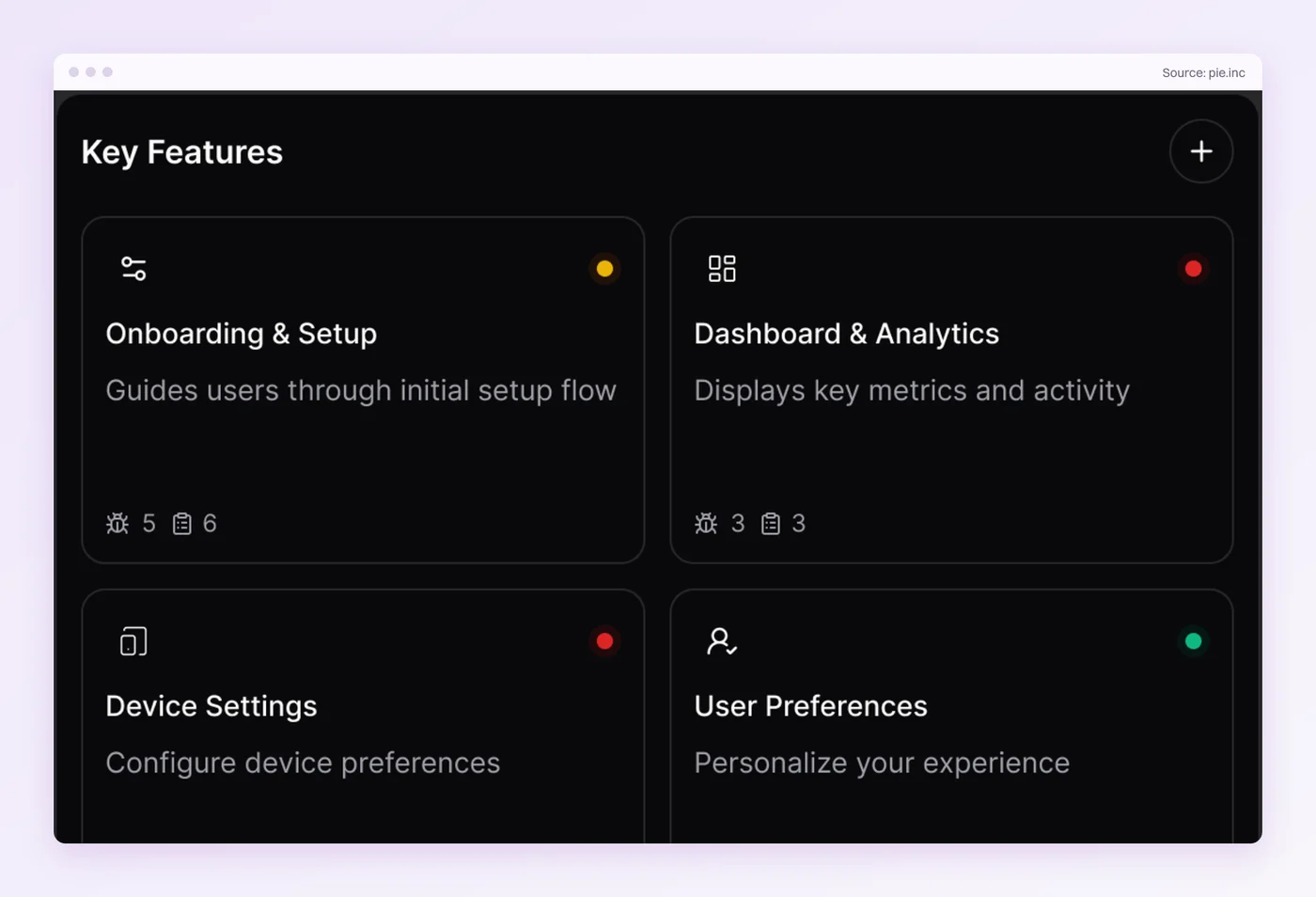
Pie is the agentic testing platform we build, and it answers the ownership question from the other end. Give it a staging URL or a mobile build plus a test login, and its agents explore the app and map the flows they can reach. They rank those flows by how critical they are and generate the regression suite through autonomous test discovery. Nobody writes a test before the first run.
Execution is vision-first, so you author supported tests without writing or maintaining selectors, on web and in native iOS and Android apps. When the product changes on purpose, you re-run the suite and edit the steps that were meant to change.
A flow you need covered by Friday goes in as a plain-English test, and test cases you already keep can come in from a CSV. With code access, Pie Loop can turn a caught regression into a proposed fix, opened as a pull request your team reviews. Fi, the smart pet collar company, runs its release testing on Pie.
Rating: 5.0/5 from 3 ratings on Gartner Peer Insights.
Strengths:
- A first suite generated from the running app before anyone writes a step
- Web and native iOS and Android apps from one platform
- Vision-first runs, with supported tests authored without selectors
- Plain-English custom tests, plus CSV import for the cases you already keep
- Pie has a SOC 2 Type 2 report
Pricing: Contact Pie for a quote.
Best for: Teams shipping web and native mobile apps who want the regression suite generated, not hand-written.
Not for: Teams that need hardware checks such as Bluetooth pairing or the camera, or load and security testing.
2. testRigor: Tests Written as Plain-English Sentences
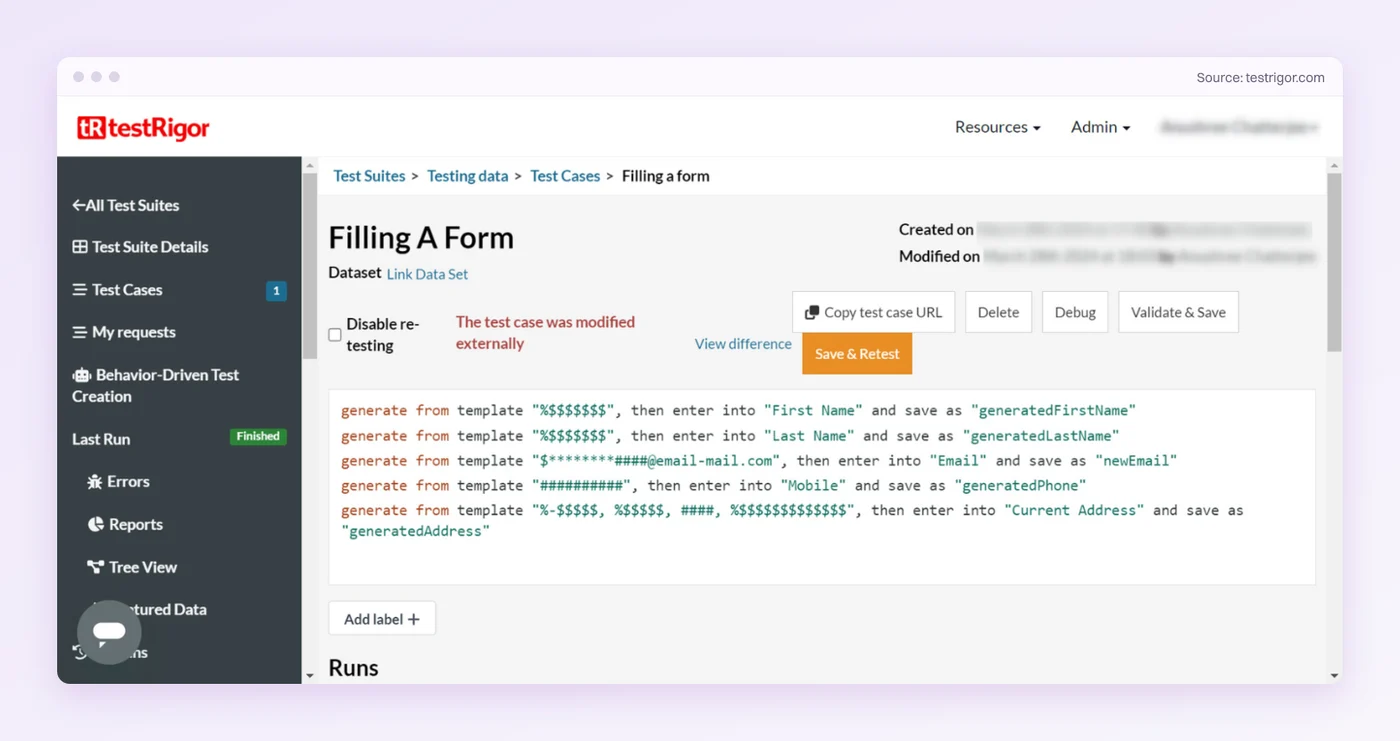
testRigor suits a team that wants to keep writing tests, in plain English, with every word under its control. A step reads like a sentence, click "Add to cart", and testRigor resolves it against the page, starting with visible text before it falls back to attributes like test ids. Its generative AI can draft test cases from a description of your app. The same platform reaches web and native mobile apps and, on paid plans, Windows desktop apps.
What it leaves you is every sentence. Someone on your side writes or approves each test and keeps it in step with the product, and because the English is the test, a renamed button label is a spec change. testRigor absorbs some of that through synonym matching, which is on by default, and Vision AI healing you can switch on. Ownership is also the axis that splits mabl against testRigor.
Rating: 4.6/5 from 47 reviews on G2.
Strengths:
- Tests written in plain English that anyone who knows the product can read, no code needed
- Web and native mobile apps, plus Windows desktop on paid plans
- AI that drafts test cases from a description of your app
Watch-outs:
- Free-plan tests and results are public
- Windows desktop testing needs a paid plan
Pricing: A free public plan. Private plans start with a two-week trial, enterprise is custom-priced, and paid plans are priced on the parallel test infrastructure you run, not per seat.
Best for: QA teams that want to write their own tests in plain English instead of code.
Not for: Teams that want private tests on a free plan, since testRigor’s free plan keeps tests and results public.
3. Testsigma: Agents on Top of an Element Repository
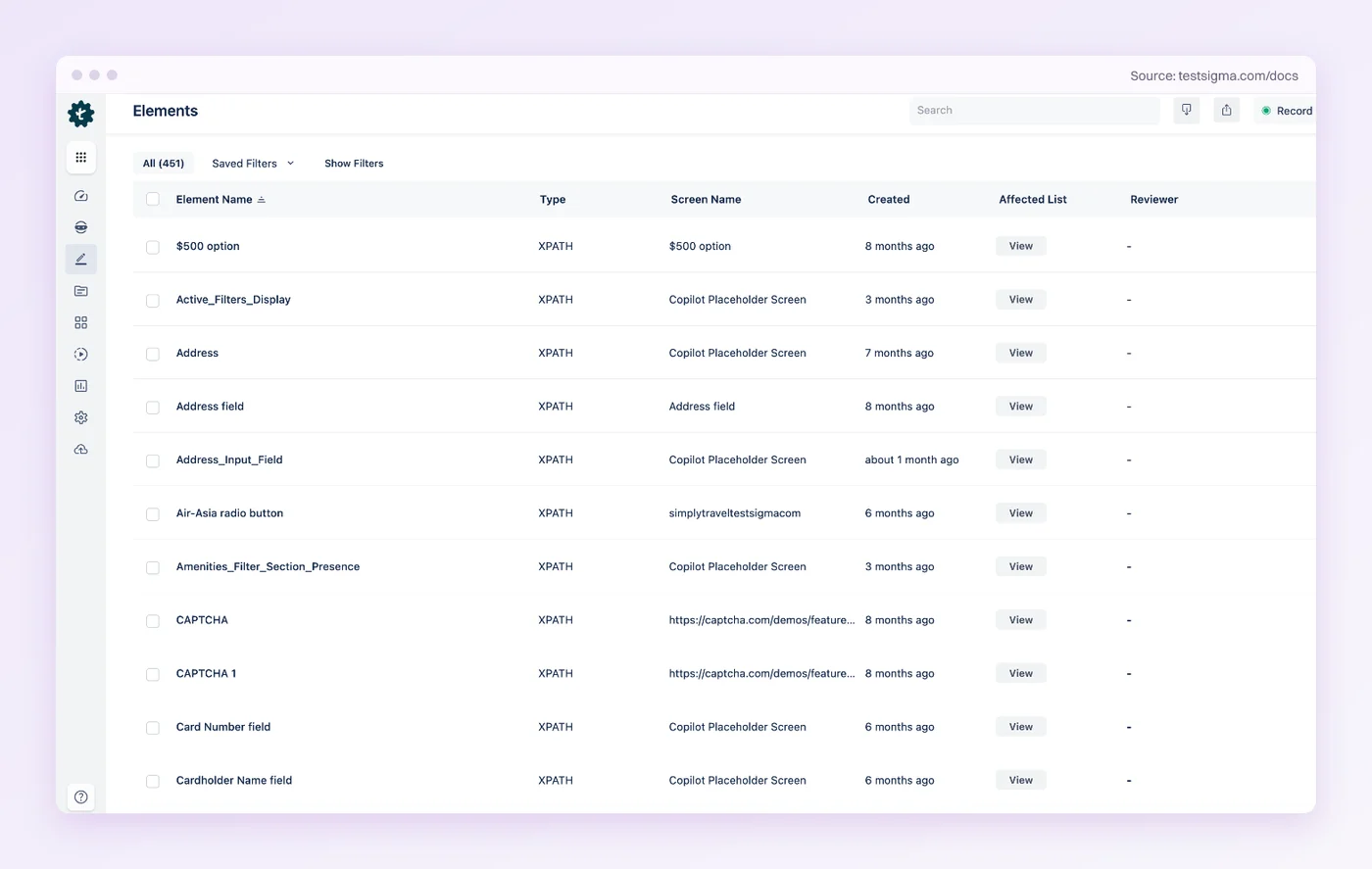
Testsigma pairs plain-English steps and a recorder with Atto, its set of AI agents. Atto drafts tests from Jira stories and Figma files, then runs and heals them. Its reach goes past web and mobile into Salesforce, SAP and Windows desktop apps, so it’s one of the broader replacements for a team leaving over coverage.
Underneath, each step points at an element saved in a repository with its locator, and the healer’s job is to update that locator when it breaks. It’s the same model classic Functionize heals inside, with more agents around it. The open-source edition sits on GitHub, but treat it as a starting point rather than a supported product.
Rating: 4.4/5 from 140 reviews on G2.
Strengths:
- Agents that draft tests from Jira stories and Figma designs
- Web, mobile, API, Salesforce, and desktop apps in one platform
- Plain-English steps anyone on the team can read
Watch-outs:
- Each step points at a saved element locator
Pricing: Pro and Enterprise plans, both custom-priced.
Best for: Enterprise QA teams testing Salesforce, SAP or desktop apps alongside web.
Not for: Teams that want a free open-source version, since its last release was in August 2023.
4. mabl: Low-Code Tests, an Agent, and Element-Level Healing
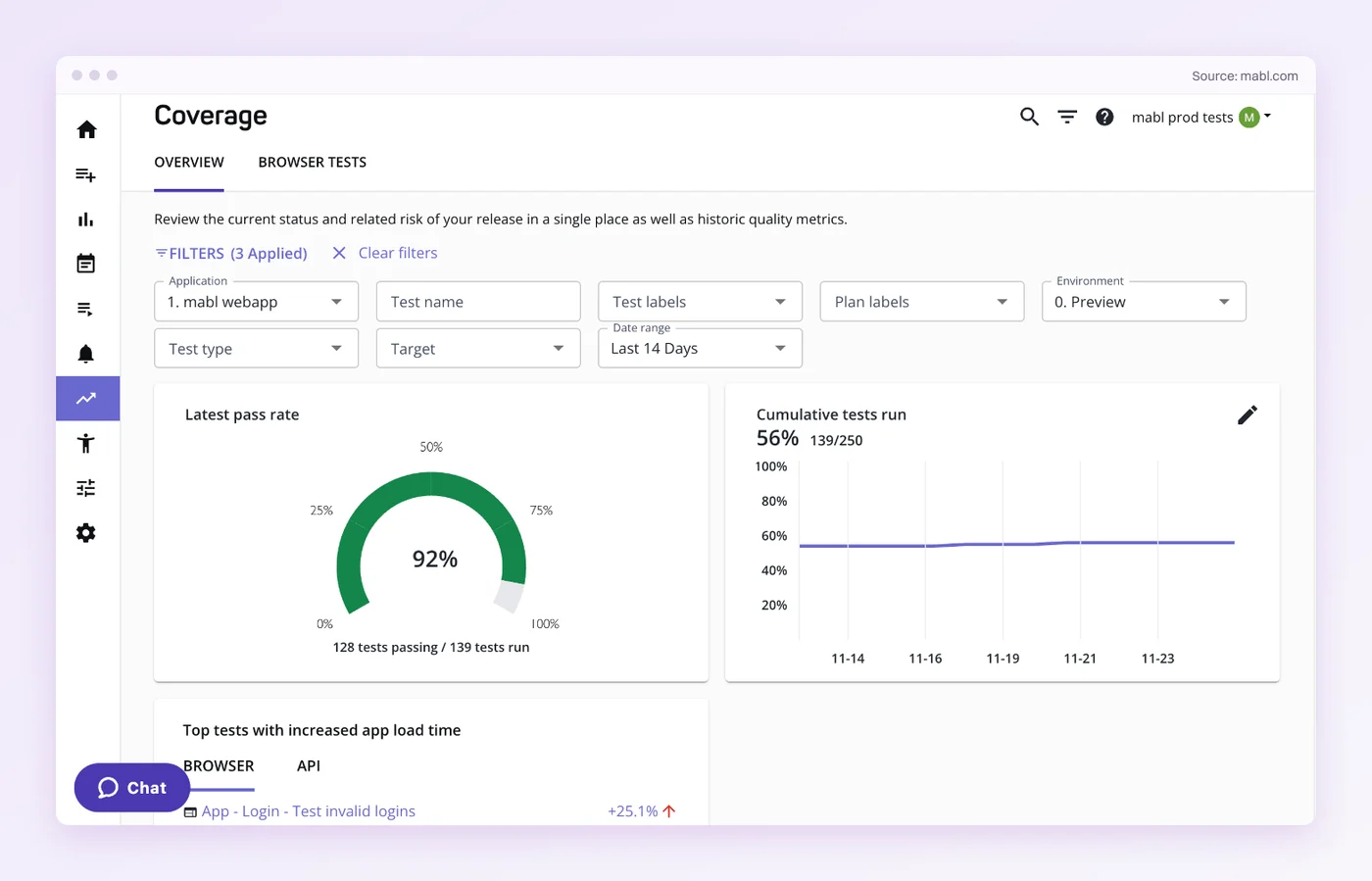
mabl records a journey in its low-code Trainer, and since April 2026 it has offered Active Coverage, an agentic loop where test authoring and recovery run without hand-offs between them. It runs web and API tests on one platform, with native mobile as an add-on, and it can put accessibility checks inside the same end-to-end tests. That breadth is a real reason teams consolidate onto it.
The healing is careful engineering. mabl’s locators use visual context and multiple attributes, and auto-heal updates element locators and test steps as the app changes.
Rating: 4.4/5 from 40 reviews on G2.
Strengths:
- Accessibility checks inside the same end-to-end tests
- Performance testing on the same platform and credit pool
- A log of recovery attempts
Watch-outs:
- Native mobile app testing is an add-on, not part of the base platform
Pricing: Quoted, with a 14-day trial. Local runs are free, and cloud runs draw on credits.
Best for: QA teams that want accessibility and performance checks in the same tool as their functional tests.
Not for: Teams that want native mobile testing in the base platform, since mabl sells it as an add-on.
Stop Writing Every Test Yourself
Point Pie at a staging build. Review a suite you didn't write.
5. Tricentis Testim: Branches, Pull Requests, and Smart Locators
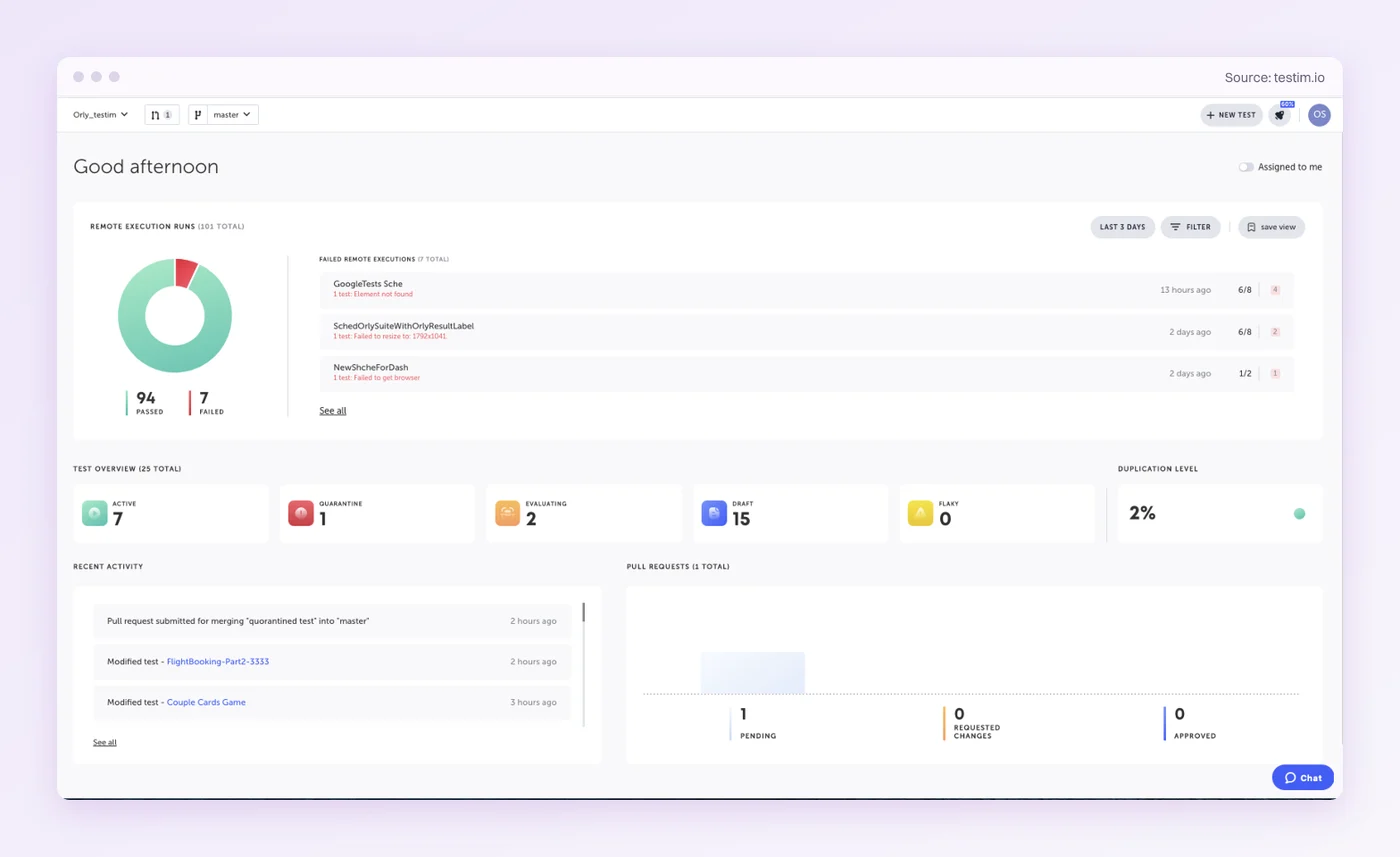
Testim, now part of Tricentis, records flows through web apps and keeps them running with smart locators that adapt as the interface changes. Its Copilot writes JavaScript for custom steps from a typed description. A Salesforce product line builds complete tests from natural language, and Testim Mobile is sold as its own product.
The ownership model is explicit. On the Pro plan, a test change can go through a pull request that an authorized reviewer approves, which suits an engineering team that already works that way. It’s the cleanest version of author-and-heal, and it’s why the Testim alternatives shortlist looks a lot like this one.
Rating: 4.5/5 from 53 reviews on G2.
Strengths:
- Smart locators that absorb routine attribute changes
- Test changes reviewed through pull requests, like code
- Salesforce-specific agentic authoring
Watch-outs:
- Pull-request review only on the Pro plan
- Mobile testing is a separate product, Testim Mobile
Pricing: Trials revert to a free Community plan. The paid Web, Mobile and Salesforce plans are priced on contact.
Best for: Engineering teams on dynamic web or Salesforce that review tests the way they review code.
Not for: Teams that want web and native mobile testing in one product.
6. Autify: No-Code Recording and a Vision-Based Agent
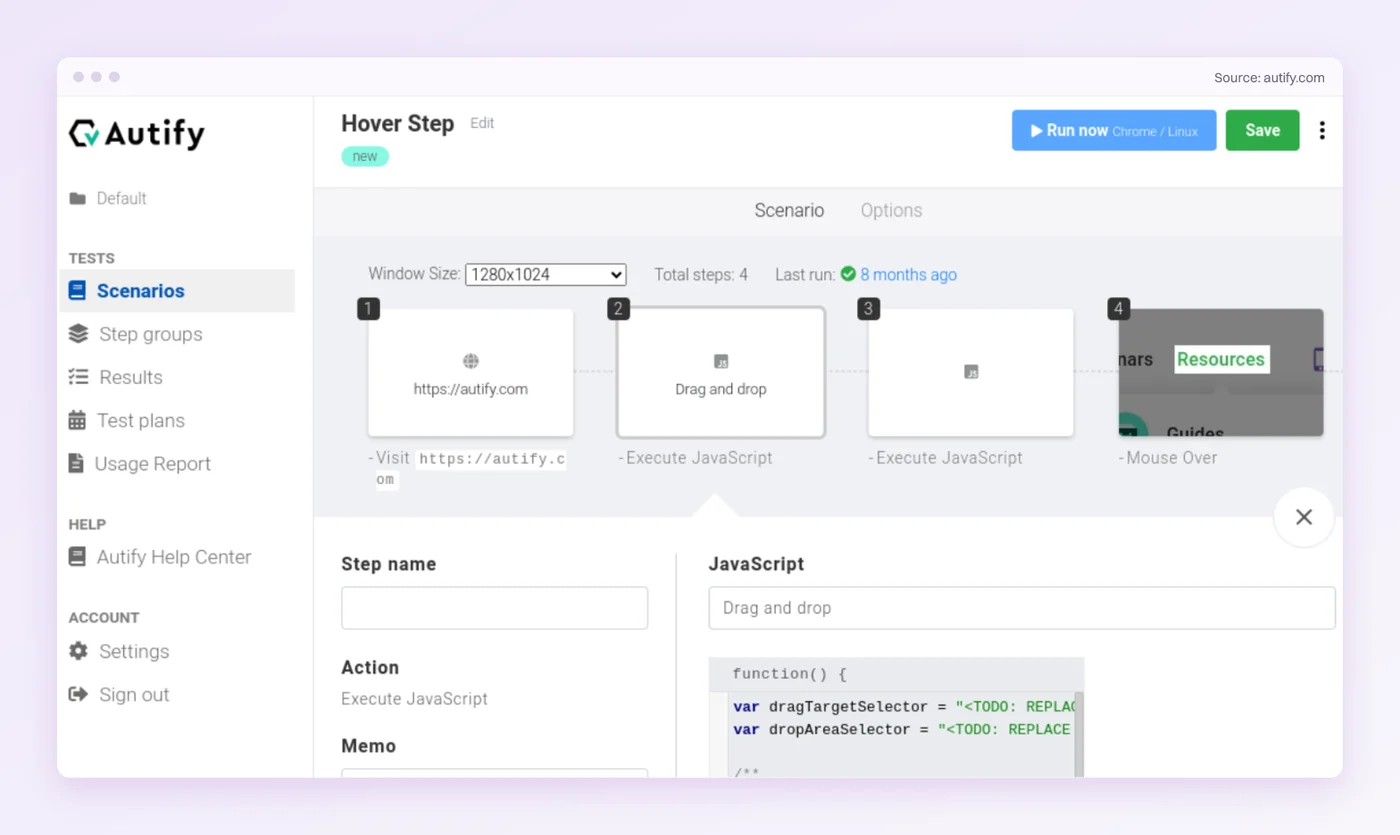
Autify offers three ways to test. Autify NoCode, the renamed Autify for Web and Autify for Mobile, records scenarios in a browser or on a device. Aximo takes a plain-English intent and works through the app by recognizing buttons and fields by how they look. Nexus is the Playwright-based option for teams that want code.
Aximo’s execution is the closest on this list to Pie’s. Where a test starts is the difference. Aximo runs the intent a person writes for each test, while Pie’s agents explore the app and generate the suite first. Teams that run Autify today face the same split when they shop Autify alternatives.
Rating: 4.8/5 from 12 reviews on G2.
Strengths:
- Recording that non-engineers can drive on web and mobile
- Aximo finds buttons and fields by how they look
- A free trial with 2,000 credits
Watch-outs:
- Desktop app testing only on the Enterprise plan
- Recording, the AI agent and the code option are three separate products
Pricing: Autify’s plans start with a free trial of 2,000 one-time credits. Core costs $99 a month billed annually or $120 monthly, Team costs $450 billed annually or $550 monthly, and Enterprise is priced on contact.
Best for: Non-technical testers who’d rather record a flow or describe it in English, on web and mobile.
Not for: Teams that need desktop app testing below the Enterprise plan.
7. Katalon: Breadth in One Studio, Now With Tests From Production
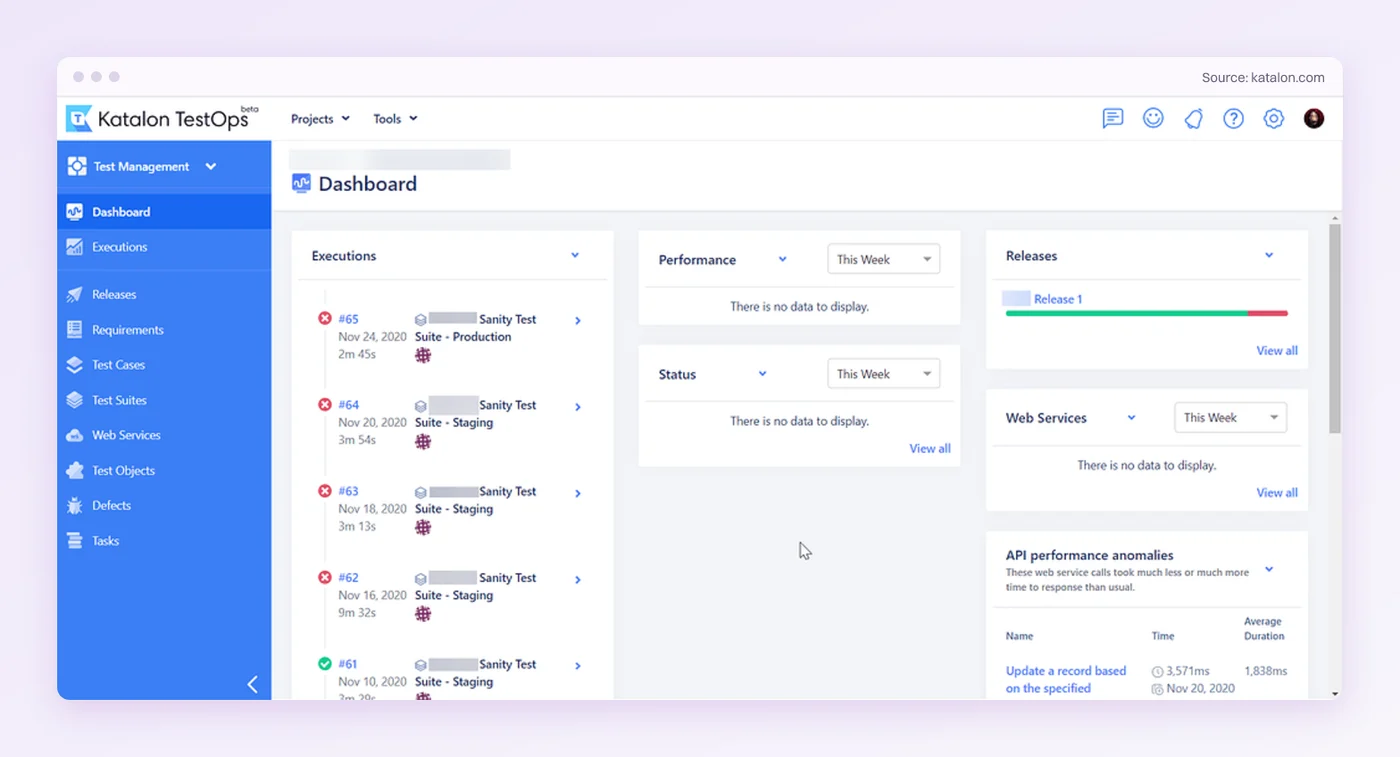
Katalon is built for breadth. One Katalon Studio project can hold web, API, mobile and Windows desktop tests, written anywhere from a recorder to Groovy scripts. In April 2026 it rolled its products into the True Platform, and TrueTest turns anonymized production sessions into test cases for the journeys your users take.
TrueTest generates coverage for you, and each generated test is reviewed before it joins an active suite. From then on it’s a Studio suite like any other. When a locator breaks, classic self-healing tries the other locators already stored on that object.
Rating: 4.4/5 from 228 reviews on G2.
Strengths:
- Web, API, mobile, and desktop from one vendor
- New tests drafted from real production sessions
- Recording, keywords and Groovy scripting for mixed-skill teams
Watch-outs:
- Classic self-healing only tries locators it has already stored
- The free plan runs tests on your own machine only
Pricing: Free for local authoring and runs. Professional lists at $2,199 per seat per year for sales-assisted purchases, and Enterprise is custom.
Best for: Organizations that want one vendor for web, mobile, API and desktop testing.
Not for: Teams that need cloud test runs without a paid plan.
8. BrowserStack Low Code Automation: Recorded Flows on Real Browsers
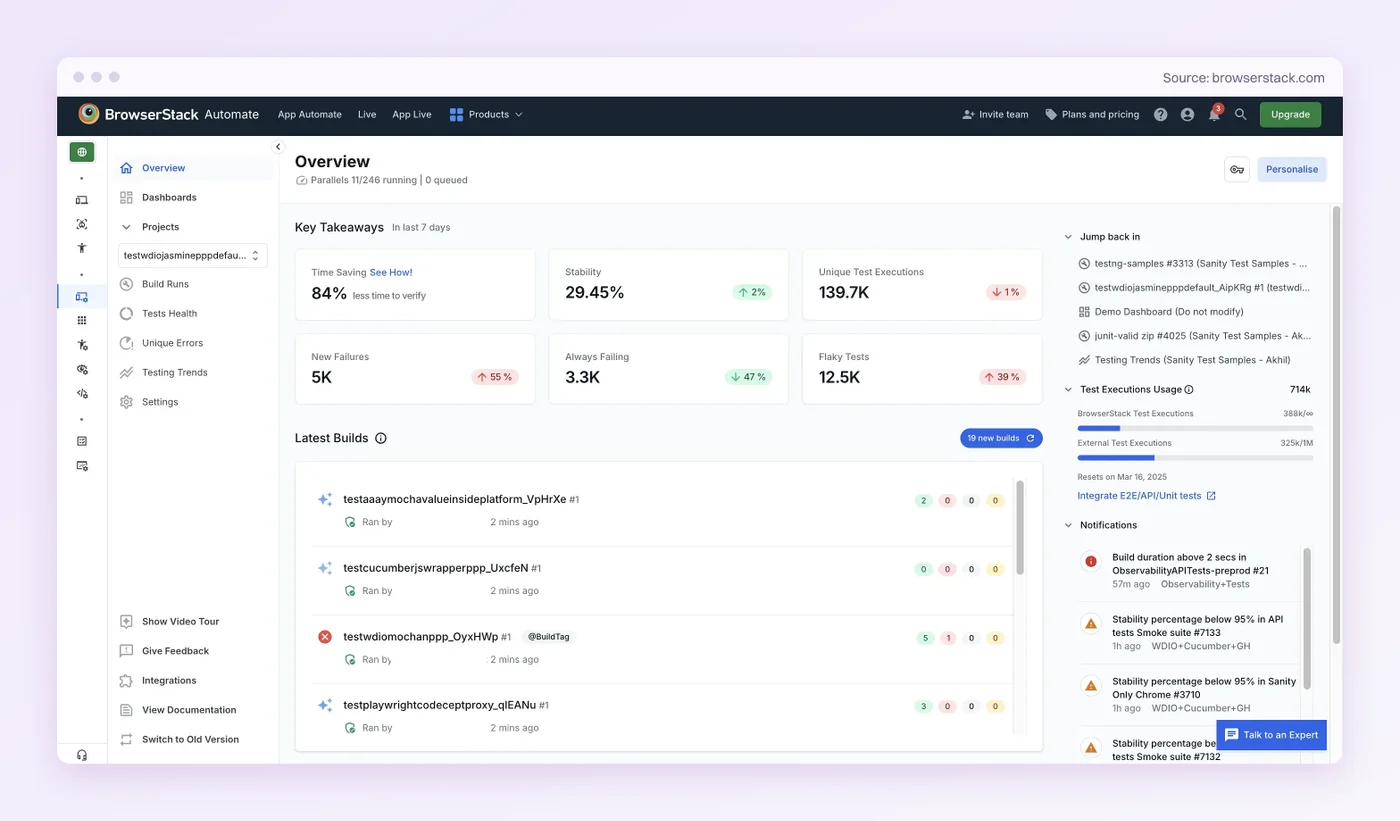
BrowserStack’s pitch is the infrastructure. Low Code Automation turns a recorded flow into a test, and an AI agent reviews and corrects it before it’s saved. The suite then runs across real desktop and mobile browsers on BrowserStack’s cloud, which matters most when a bug only reproduces in one browser or on one device.
It solves the device-lab problem, and the suite stays yours. You record every flow, and on the Pro plan and above, AI self-healing keeps its locators current.
Rating: 4.4/5 from 3,362 reviews on G2 for BrowserStack as a whole.
Strengths:
- Real desktop and mobile browsers behind every run
- Recording plus an AI agent that corrects tests before they’re saved
- AI self-healing that updates broken locators
Watch-outs:
- AI self-healing only from the Pro plan up
Pricing: A free Low Code Automation plan, then Essentials, Pro, Ultimate and Enterprise tiers priced on inquiry.
Best for: Teams whose bugs only show up on specific browsers or devices.
Not for: Teams that want AI self-healing on the free plan.
Match the Alternative to the Wall You Hit
Pick the replacement by the wall you hit, because a tool that shares your problem just moves the same work to a new login.
- Native mobile apps: Pie’s agents generate the suite for web and native iOS and Android apps from one platform. Most of the others reach native mobile too if you’d rather keep authoring.
- Plain-English tests: Choose testRigor if your team wants to write every test in English, or Pie if you want plain-English tests on top of a suite its agents generate from the flows they can reach.
- Device-specific bugs: BrowserStack Low Code Automation runs your recorded flows on real desktop and mobile browsers.
- Desktop and ERP reach: Katalon and Testsigma test Windows desktop apps, and Testsigma handles SAP and Salesforce.
- Code-style review: Testim puts test changes behind a reviewed pull request on its Pro plan.
- A free start: Autify’s Aximo starts on a free trial and takes plain-English intent.
More healing won’t close a native mobile gap.
Leave Functionize for a Reason Another Tool Fixes
Studio has made more AI a poor reason to leave Functionize. The reasons that survive a switch are narrower, and the eight alternatives split on them.
Functionize’s Studio description doesn’t mention native iOS and Android app testing. And most of the alternatives leave someone on your team authoring each test and keeping it current.
We built Pie for a team with both problems, an app that lives on a phone as much as in a browser and a suite nobody has time to write. Its agents generate and run that suite across web and native mobile, and your team keeps the calls that need a person. Point it at a build and see what it finds.
Less Writing. Less Repairing. More Shipping.
Bring a staging URL or a mobile build. Review what the agents find.
Frequently Asked Questions
For teams with native iOS and Android apps, Pie, because its agents explore the flows they can reach and generate the regression suite.
If you want to write every test yourself in plain English, testRigor fits, and Katalon puts web, API, mobile and desktop tests in one project.
Native mobile apps are the clearest reason. Functionize's pages describe web and mobile-web testing, and Studio's list of what it tests leaves out native iOS and Android apps.
Suite ownership is the other. Outside what Studio builds, people on your team write and maintain the tests.
Studio is the agentic product Functionize launched in July 2026. Its agents build tests against the live web app and repair them as the app changes.
Studio also tests APIs and email flows, and a coding agent can drive it over MCP.
Most do. testRigor, Testsigma, Katalon and Autify describe native iOS and Android testing, mabl offers it as an add-on, and Testim sells it as a separate product.
Pie covers native mobile alongside web, on iOS simulators and Android emulators, with real devices available on demand.
Several have a free way in. testRigor's free plan keeps tests public, Katalon's free plan covers local authoring, and BrowserStack Low Code Automation has a free plan.
Testim trials revert to a free Community plan, Autify offers a free trial, and Functionize itself now has a free plan.
It reduces it. Self-healing finds an element again when one of its attributes changes, which absorbs routine UI churn.
A redesign that changes structure and copy at once leaves the healer little to match. Vision-first tools remove selector repair, but an intended product change still means updating the test.
For functional and end-to-end testing of web and native mobile apps, yes. Pie's agents explore the app and generate the regression suite, and you author supported tests without writing or maintaining selectors.
Teams whose core need is load or security testing should keep a dedicated tool for it.
13 years building mobile infrastructure at Square, Facebook, and Instacart. Now building the QA platform he wished existed the whole time. LinkedIn →